Start With What: Why Curiosity Beats Conviction for New Sales Leaders
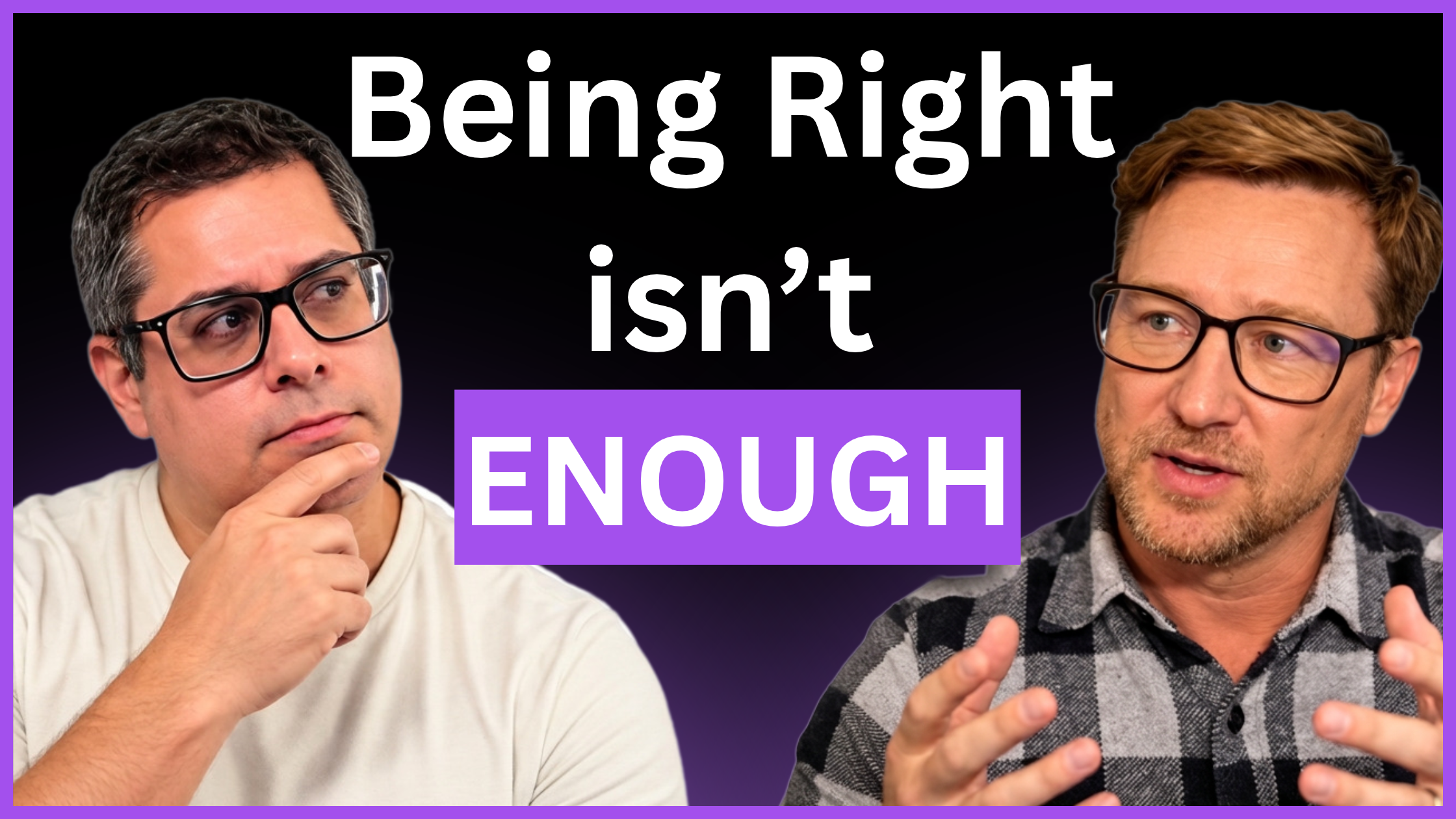
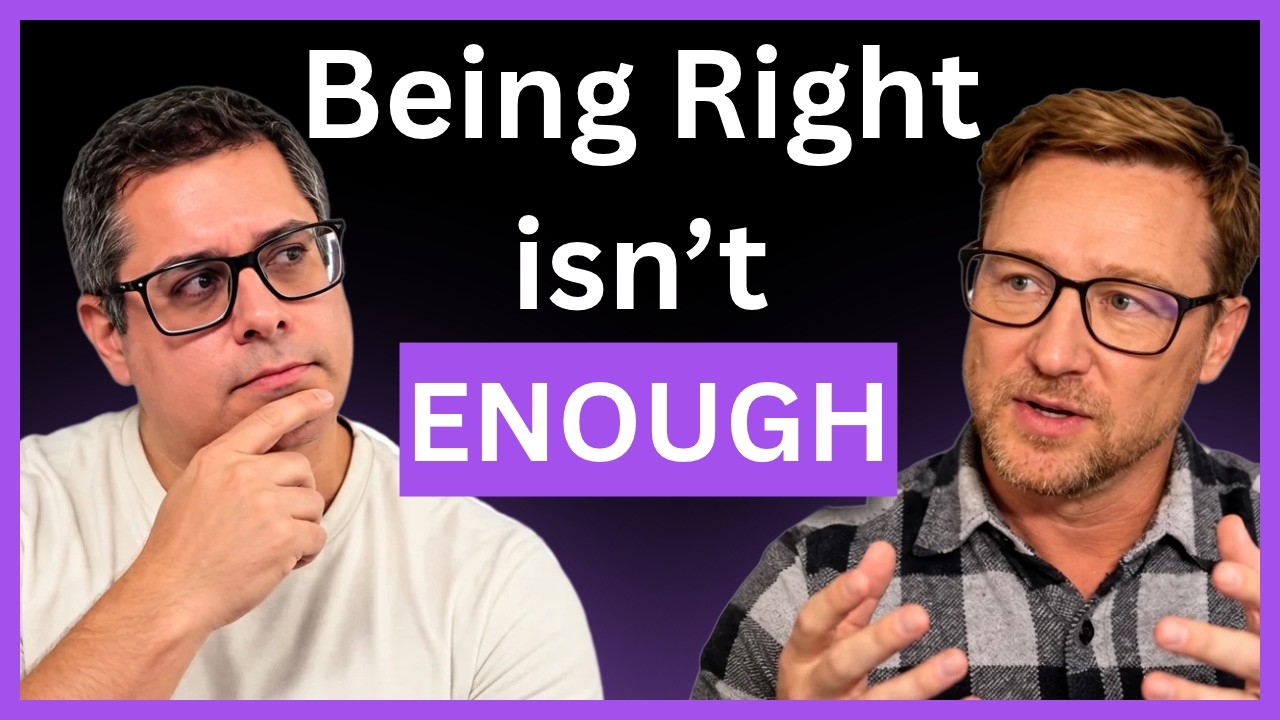
Every people leader hits the same wall: they know what the team should do, and the team still does not do it. I have been there. Being right, it turns out, is not the same as being heard.
On a recent episode of The MIC (Manager In Charge), I sat down with Dr. David Smailes to unpack that challenge. David is an executive coach and TEDx speaker. He holds a doctorate in leadership and learning in organizations from Vanderbilt University and a master's in education leadership from Harvard. His work centers on one challenge: helping people become the person others listen to.
The conversation was less an interview than a working session. David pushed back, asked questions, and by the end had me examining my own habits. For new people leaders in sales and customer service, it offers a practical model for building influence from day one. Watch the full episode on YouTube or listen on Spotify.
Influence Starts With Relationships, Then Results
David traced his own turning point to a piece of feedback. Frustrated that his ideas were not gaining traction, he asked a trusted vice president for advice. The answer stuck with him:
What is the point of being right if nobody listens to you?
That moment reshaped how he defines influence. He now teaches it as two ingredients, in a deliberate order: relationships, then results. When a leader has strong relationships, people tend to credit the team's success to that leader. When the relationships are weak, the same results get attributed to luck, timing, or someone else.
For a new people leader, the lesson is direct and hits home with me. Hitting quota earns attention. Trust is what earns credit, buy-in, and a team that follows the plan when the leader is not in the room is a thriving team.
Start With What, Not Why
David's TEDx talk offers a different angle on Simon Sinek's famous "Start With Why." His argument: a strong why inspires people who already agree with you. In my experience, most leadership moments involve people who do not. A frustrated rep, a skeptical peer, or a customer ready to walk will not be moved by a mission statement (unless you have a lot of money to give away). I am kidding, or am I?
What moves them is curiosity. Starting with "what" means asking questions before offering conclusions:
- What is happening here?
- What would a good outcome look like?
- What is getting in the way?
This idea resonated with me more than the why framework, because I believe progress usually comes from clear actions, not just a clear purpose.
David grounds the idea in a personal story. Before a family ski trip, he gave his brother-in-law a blunt, tough-love talk about the direction of his life. It did not land. His brother-in-law passed away days later, and the conversation was never finished. The loss taught David that confrontation rarely changes people. Curiosity does.
He also points to the FBI. After the 1993 Waco standoff ended in tragedy, the Bureau rethought its negotiation approach. Negotiators learned that what appears to be conviction is often confusion: people making demands frequently do not know what they want. A later standoff with the Montana Freemen ended peacefully after negotiators led with understanding.
The principle David repeats throughout: you cannot influence what you do not understand. And often, the other person does not fully understand themselves. Helping them figure it out is the leader's gift.
What a Crisis Hotline Teaches About Leadership
During COVID, inspired by negotiation expert Chris Voss, David volunteered at a crisis hotline. Volunteers are trained to stay neutral, build rapport, and keep it for the entire call. He described the work as both torture and liberating: the volunteer is not in control, but creates enough space for the caller to work through their own situation.
One caller stood out. David first reacted to everything the man said. Over time, he realized the caller mostly wanted a friend, and their conversations grew longer and drifted far from the original topic. The takeaway David carries into his coaching is that, more than anything, people want to be understood.
This one hit home for me. I once spent two years reporting to a leader I would describe as toxic. I went to therapy, eventually took the issue to HR, and still have not received an apology. Today, I wish that person well. My takeaway is simple: hurt people hurt people. For more on creating a team where people feel safe, see How to Be a Trustworthy Leader: Build Psychological Safety.
A First-30-Days Playbook for New People Leaders
I asked David what a brand-new people leader should do in their first 30 days. David, who trains new leaders at a large California tech company, laid out a clear sequence:
- Run a listening tour. Meet each team member and ask what they think, as if seeing the work for the first time. Do this even when promoted from within the same team. Every leader eventually ends up doing a listening tour; doing it late is far more costly.
- Share what you heard. Aggregate the themes and bring them back to the team.
- Set expectations together. Because the team helped shape the standards, they are more likely to own them. Ask how the team will hold the standard and what role the leader should play.
- Build rapport, then maintain it. Like the hotline, rapport is not a one-time step. It runs through every conversation.
- Give timely feedback and follow through on accountability.
- Role model the standard. David calls it the most powerful influence tool a leader has.
His one diagnostic question for any new manager:
- On a scale of one to five, how strong are your relationships with your team?
A leader at a two should pause the performance push and rebuild trust first. It is okay to hit pause.
Accountability Without Breaking Trust
Most managers handle a performance gap the same way: here is the standard, here is where you are, close the gap. David adds a step most skip. He gets to know people well enough to frame feedback in terms of who they are.
He shared two examples. In one instance, a leader said that a team member "hated authority." But she had been a 4.0 student at the top of her class, so following direction clearly was not the issue. Conversation revealed she was receiving negative feedback, possibly for the first time, and was deflecting it. In another instance, a leader claimed that an employee could not learn a process. David noticed photos of his boat on his cubicle wall and asked him to walk through the process of launching it. The process was methodical and precise. The real problem was buy-in, not ability.
David and I also agreed that the strongest working relationships are not conflict-free. I see healthy conflict as the price of deeper rapport, while too much comfort can let standards slide. David's advice for avoiding hard conversations later is to do the heavy lifting up front: be clear about expectations before someone joins the team.
Reflection Moves You Forward; Dwelling Holds You Back
Near the end, David turned his curiosity on me. I named a habit I am working to break: dwelling. I picked it up from watching my parents hold on to each other's mistakes for decades, and I have learned that dwelling delays development. David drew the distinction clearly. Reflection visits the past to move forward. Dwelling builds a house in the past and stays too long.
Then came the coaching question: what would replace dwelling? I landed on grace and on being present. I thought about closing my laptop to watch a movie with my son and feeling a rare sense of peace. When David asked how I would make that real, my answer was to take stock of the gifts I already have, not just the goals still ahead.
It was a live demonstration of the episode's thesis. David offered no answers, only questions, and I left with a clearer sense of what I wanted. That is what starting with what looks like in practice.
An action to improve week: Rate the strength of your relationship with each person on your team from one to five.
Start your next one-on-one with a "what" question instead of a solution.
Connect with David Smailes on LinkedIn, and watch the full conversation on YouTube for more on becoming the leader your team actually listens to.
Founder
Sales enablement executive driving enterprise performance through scalable training strategy, behavioral sales methodology, and cross-functional alignment. Translates complex product and commercial priorities into field-ready programs that accelerate adoption, improve close rates, and deliver impact across national dealer and sales networks. Recognized for transforming training functions into strategic business drivers by integrating data analytics, AI-enabled content development, and leadership coaching to elevate performance at scale.
Past Results:
• Transformed national sales training strategy by shifting from technical instruction to behavior-based selling, training over 500 dealerships and driving record performance, contributing to over $700M in revenue.
• Spearheaded sales enablement for new product launches, developing and delivering training while coaching 60 field leaders to drive consistent execution, contributing to $11M in first-year revenue.
• Developed and delivered behavior-based training programs (DiSC) for leadership and sales, equipping over 1000 learners with tools to improve communication, engagement, and selling effectiveness.
• Introduced and scaled an enterprise-wide training evaluation framework, establishing the first-ever measurement system and achieving a 4.9/5 participant satisfaction score.
• Leveraged business knowledge to build and scale The MIC (Manager in Charge), a leadership-focused podcast, from inception to a top-50 category ranking.
Request a FREE 30-Minute Sales Audit directl…
How to Be a Trustworthy Leader: Build Psychological Safety